Diabetes is changing the way we think about healthcare.
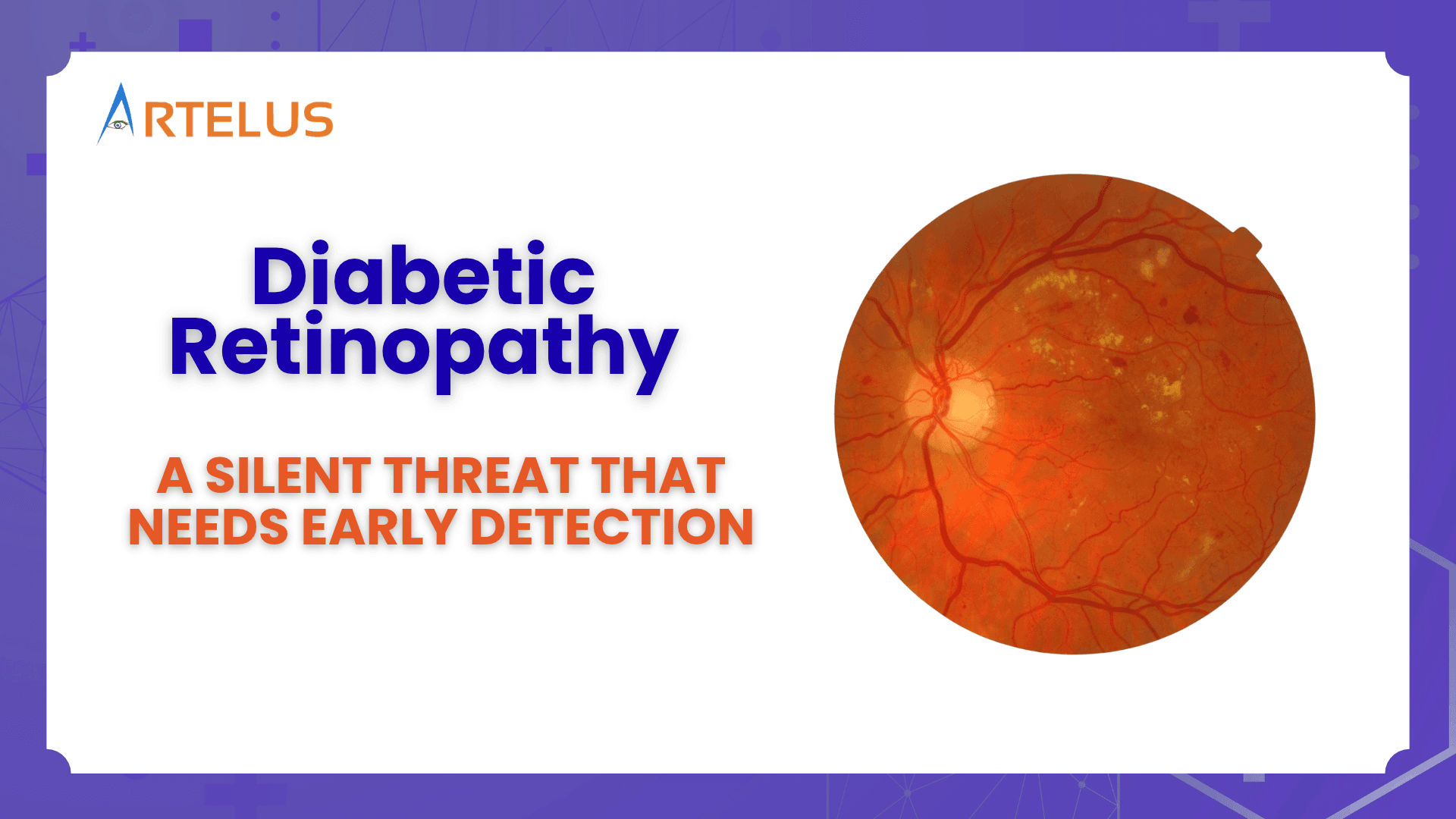
As the number of people living with diabetes continues to grow, so does the risk of diabetes-related complications, including Diabetic Retinopathy (DR), one of the leading causes of preventable vision loss.
The challenge is not simply detecting diabetic retinopathy.
The real challenge is detecting it early, consistently, and at scale.
For millions of people, particularly those living in rural, remote, and underserved communities, access to regular retinal screening remains difficult. Specialist eye-care services may be far away, screening infrastructure may be limited, and many people may not seek care until they notice changes in their vision.
This is where Artificial Intelligence is beginning to change the equation.
**When Vision Loss Can Begin Silently **
Diabetic Retinopathy affects the blood vessels of the retina. In its early stages, it may develop without obvious symptoms.
A person can feel perfectly well while changes are already taking place at the back of the eye.
By the time vision becomes noticeably affected, the condition may have progressed significantly.
This makes regular retinal screening particularly important for people living with diabetes.
But how do we make regular screening possible for millions of people?
That is where technology can help.
AI: Turning Retinal Images Into Early Insights
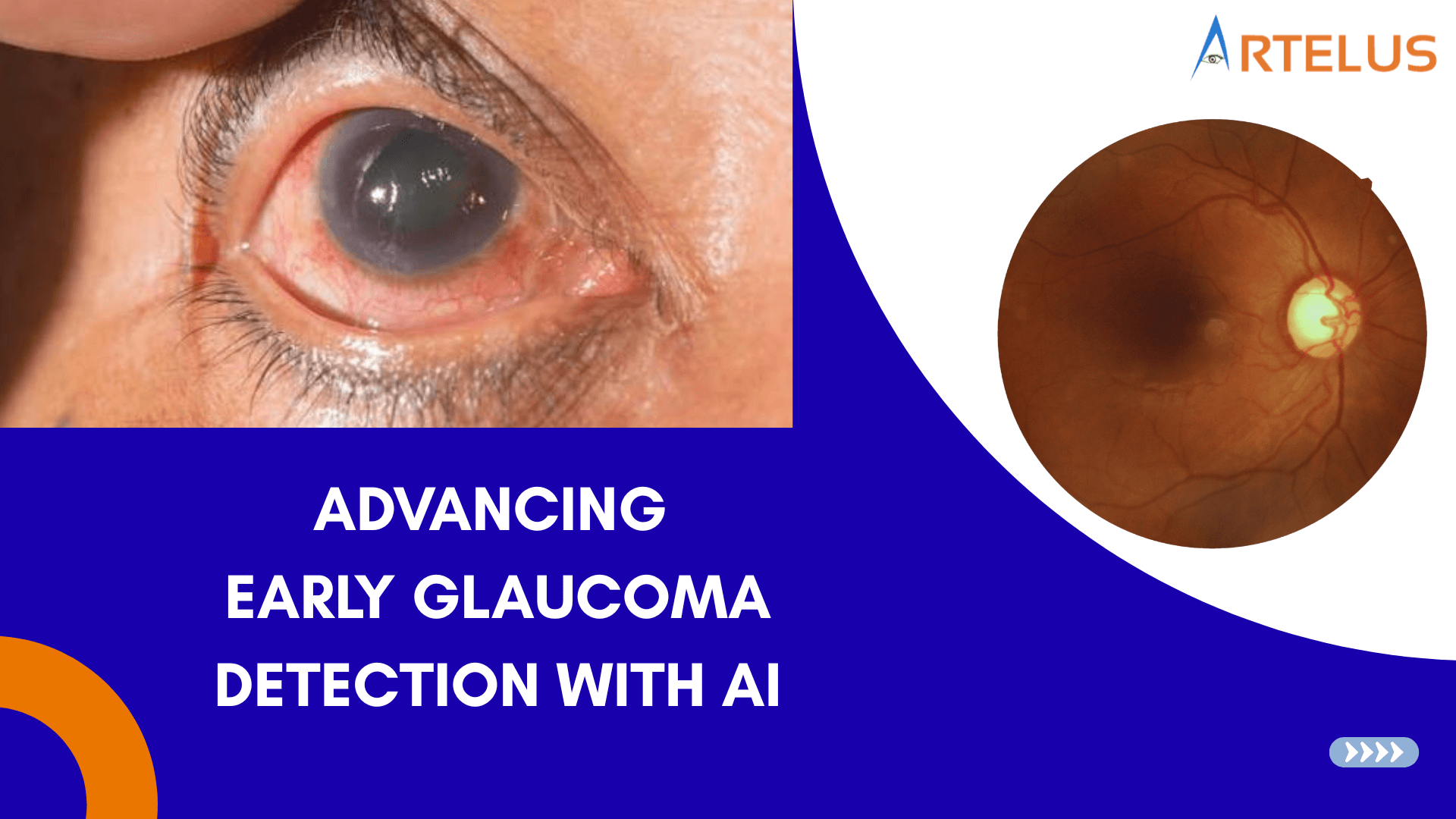
AI-powered retinal screening systems can analyze fundus images and identify patterns associated with diabetic retinopathy and other retinal abnormalities.
The process can be simple:
**Capture a retinal image → AI analyzes the image → Potential abnormalities are identified → Patient is referred for clinical evaluation **
This can help healthcare teams screen larger populations and identify individuals who may require further assessment.
AI does not replace the ophthalmologist.
Instead, it can help bring an additional layer of screening capability into settings where specialist resources may be limited.
**Taking Screening Beyond the Hospital **
Healthcare access should not depend entirely on how close someone lives to a specialist.
This is especially important in a country as geographically diverse as India.
An individual living in a remote village may face very different barriers to eye care than someone living in a major city. Travelling long distances, taking time away from work, and limited availability of specialists can all become obstacles to routine screening.
AI-powered screening creates an opportunity to take retinal screening closer to communities.
Screening can potentially be conducted at community centers, workplaces, healthcare camps, institutions, and other locations where people already gather.
This shift, from patients travelling to screening facilities to screening reaching communities, can make early detection more accessible.
**Artelus: Taking AI-Powered Eye Screening Across India **
At Artelus, this approach is already being put into practice.
Artelus is taking AI-powered eye screening beyond traditional healthcare facilities and into communities across India, including remote and underserved areas.
Through screening camps and community initiatives, Artelus has been working to bring retinal screening closer to people who may have limited access to specialist eye care.
These initiatives are conducted in different settings and locations, helping demonstrate how AI-powered screening can be integrated into real-world healthcare environments.
The objective is not simply to introduce AI.
It is to use AI where it can make a meaningful difference.
**DRISTi AI: Screening Without Depending on Constant Connectivity **
One of the challenges of taking healthcare technology to remote locations is connectivity.
Not every community has reliable, high-speed internet access.
Artelus's DRISTi AI is designed as an offline AI-powered diabetic retinopathy screening solution. It can analyze retinal images locally, allowing screening to be performed even in environments where continuous internet connectivity may not be available.
This capability can be particularly valuable for community screening programs.
Because healthcare technology becomes truly impactful when it can work in the environments where healthcare gaps exist.
From Screening Camps to Healthcare Events
Artelus's work also extends beyond community screening.
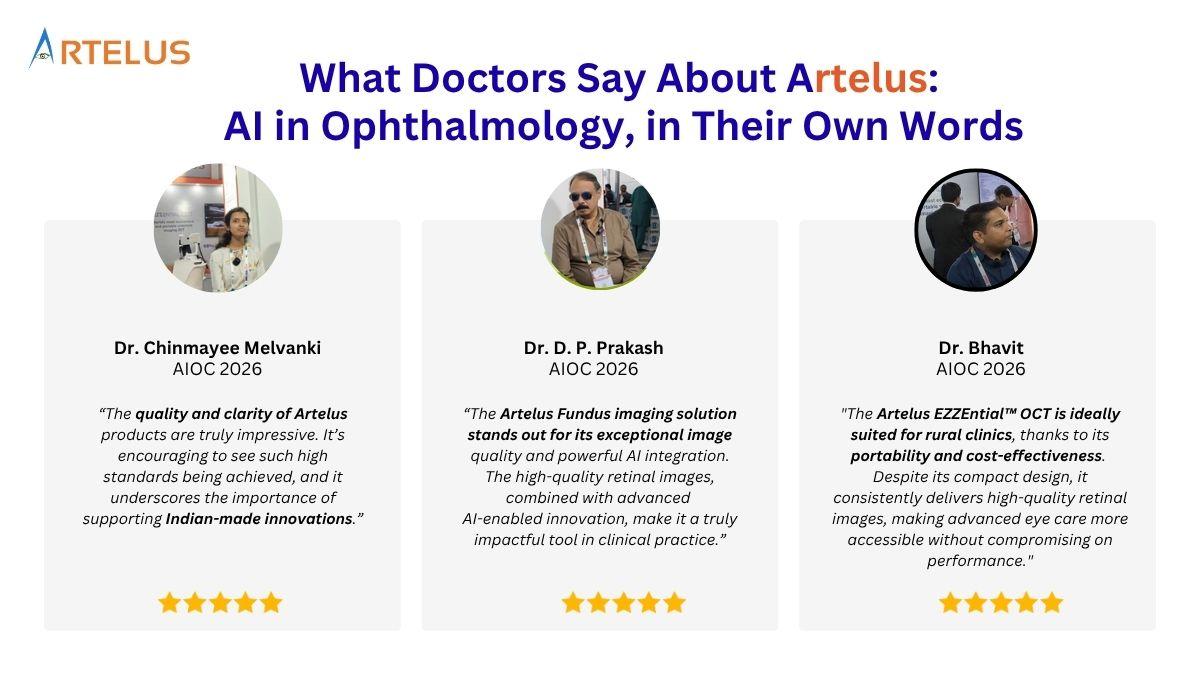
The company participates in ophthalmology, healthcare, technology, and industry events to demonstrate its AI-powered eye-care solutions and engage with healthcare professionals and other stakeholders.
These events provide an opportunity to showcase how AI can be incorporated into real-world screening workflows and to exchange ideas about the future of technology-enabled eye care.
From a community screening camp to a major healthcare event, every interaction contributes to a larger conversation:
How can technology help make quality eye care more accessible?
Screening Is Only the Beginning
AI-powered screening can help identify people who may be at risk.
But screening alone is not enough.
A positive or suspicious screening result needs to lead to appropriate clinical evaluation, treatment, and follow-up.
This means an effective eye-care ecosystem needs to connect:
Screening → Detection → Referral → Diagnosis → Treatment → Follow-up
AI can strengthen the screening and detection stages, while ophthalmologists and other healthcare professionals remain essential for clinical decision-making and patient care.
The goal is to make the entire pathway more accessible and efficient.
Beyond Diabetic Retinopathy
The potential of AI in ophthalmology goes beyond a single disease.
Retinal images can contain signs associated with multiple eye conditions and abnormalities. As AI technology continues to evolve, retinal imaging can become an increasingly valuable tool for broader eye-health screening.
This opens the door to a future where a single screening encounter can provide insights that help identify multiple potential eye-health concerns.
For large populations, that could make preventive eye care more proactive.
**Why Early Detection Matters **
There is a fundamental difference between treating vision loss after it occurs and identifying disease before significant damage develops.
Early detection provides an opportunity to connect patients with appropriate care sooner.
For people living with diabetes, regular retinal screening can therefore become an important part of long-term health management.
And when technology helps make that screening more accessible, the potential impact extends far beyond individual patients.
It reaches families.
Communities.
And entire populations.
Building a Vision for the Forgotten Billion
At Artelus, technology is only one part of the mission.
The larger goal is to help address the gap between those who need healthcare and those who can access it.
That is why Artelus continues to take AI-powered eye screening into communities across India, including locations where access to specialist eye care can be challenging.
Through screening camps, institutional initiatives, healthcare programs, and participation in industry and ophthalmology events, Artelus is working to demonstrate what accessible AI-powered eye care can look like in the real world.
Because innovation should not remain confined to laboratories, hospitals, or technology demonstrations.
It should reach the people who need it most.
**The Road Ahead **
India's healthcare landscape is evolving rapidly.
AI, portable imaging technologies, digital healthcare infrastructure, and community-based healthcare models are creating new possibilities for preventive care.
In ophthalmology, these technologies can help shift the focus from waiting for vision problems to appear toward identifying potential disease earlier.
The opportunity is enormous.
But the measure of success will not simply be how advanced the technology becomes.
It will be how many people it reaches.
At Artelus, that journey continues with a simple belief:
**Your Vision. Our Mission. **
Because every person deserves the opportunity to detect eye disease early, access appropriate care, and protect their sight.
And that is what building a Vision for the Forgotten Billion is all about.